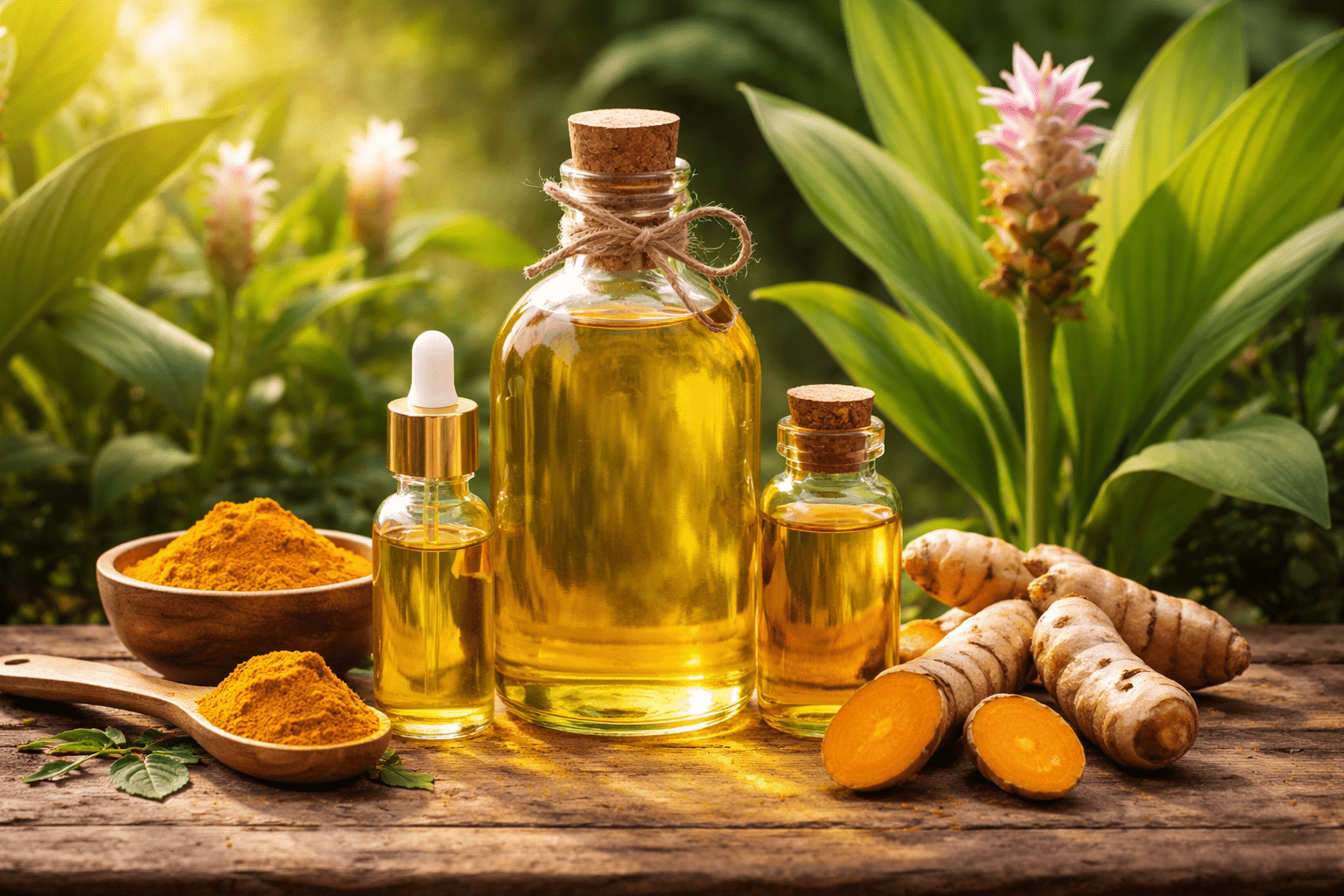
Turmeric Oil

Curcuma longa

Product History

Turmeric essential oil is derived from the rhizomes of the turmeric plant, scientifically known as Curcuma longa, which has been cultivated for thousands of years in India and Southeast Asia. Historically, turmeric has been a cornerstone of traditional systems like Ayurveda and Chinese medicine, valued for its anti-inflammatory, antimicrobial, and healing properties. While the powdered form of turmeric has long been used as a spice, dye, and medicinal ingredient, the extraction of its essential oil began gaining attention with the development of steam distillation techniques.

In ancient times, turmeric was used in religious rituals, skincare, and natural remedies, but the essential oil form became more prominent in the modern era, especially with the rise of aromatherapy and natural wellness industries. The oil contains active compounds such as turmerone, which contribute to its therapeutic benefits. Over time, turmeric essential oil has found applications in pharmaceuticals, cosmetics, perfumery, and holistic healing practices, making it a valuable product in both traditional and contemporary markets.

Distillation Process

  • Harvesting and Chopping Preparation
    Mature turmeric rhizomes are harvested, cleaned thoroughly to remove soil and impurities, and then sliced or crushed into smaller pieces. This increases the surface area, allowing better release of essential oil during distillation.
  • Steam Generation and Distillation
    The prepared turmeric material is placed in a distillation unit. Steam is generated in a separate boiler and passed through the plant material. The heat causes the oil glands to break, releasing volatile compounds which evaporate along with the steam.
  • Condensation & Oil Separation
    The steam carrying the essential oil vapors is directed into a condenser, where it cools and turns back into liquid. This liquid mixture of water and oil is then collected in a separator, where the essential oil naturally separates from the water due to density differences.
  • Filtration & Storage
    The extracted oil is filtered to remove any impurities or moisture traces. Finally, it is stored in airtight, dark glass containers to protect it from light, heat, and oxidation, ensuring long shelf life and quality.

Specifications

Parameter
Specification
Botanical Name
Curcuma longa
Origin / Source
INDIA
Extraction Method
Steam Distillation
Plant Part Used
Fresh & Dried Rhizomes
Oil Colour
Pale Yellow to Light Amber
Aroma Profile
Warm, Earthy, Spicy, Woody, Slightly Peppery
Consistency
Medium
Shelf Life
3 Years
Blends Well With
Black Pepper, Cardamom, Ginger, Frankincense, Lemon, Orange, Vetiver

Safety & Precautions: May stain skin/fabric yellow. Dilute before use. Avoid during pregnancy. Patch test recommended.

Available Pack Sizes: 1kg, 5kg,10kg,25kg Aluminium Bottle

Powerful Uses of Turmeric Oil

Skin Brightening & Glow

Turmeric oil helps improve skin tone and enhance natural radiance. It supports a brighter, more even-looking complexion.

Anti-Inflammatory & Acne Care

Its powerful anti-inflammatory and antibacterial properties help reduce acne, redness, and skin irritation. Ideal for clearer, healthier skin.

Wound Healing & Skin Repair

Traditionally used for its healing properties, turmeric oil supports faster recovery of minor cuts, scars, and damaged skin.

Joint Pain & Muscle Relief

When diluted and massaged, it helps reduce joint pain, stiffness, and muscle soreness. Commonly used for body relaxation and recovery.

Antioxidant Protection

Rich in antioxidants, it helps protect the skin and body from environmental damage and premature aging.

Scalp Health & Hair Strength

Turmeric oil helps maintain a healthy scalp by reducing dandruff and irritation. It supports stronger, healthier hair growth.

© Moreways Co., Ltd. All Rights Reserved