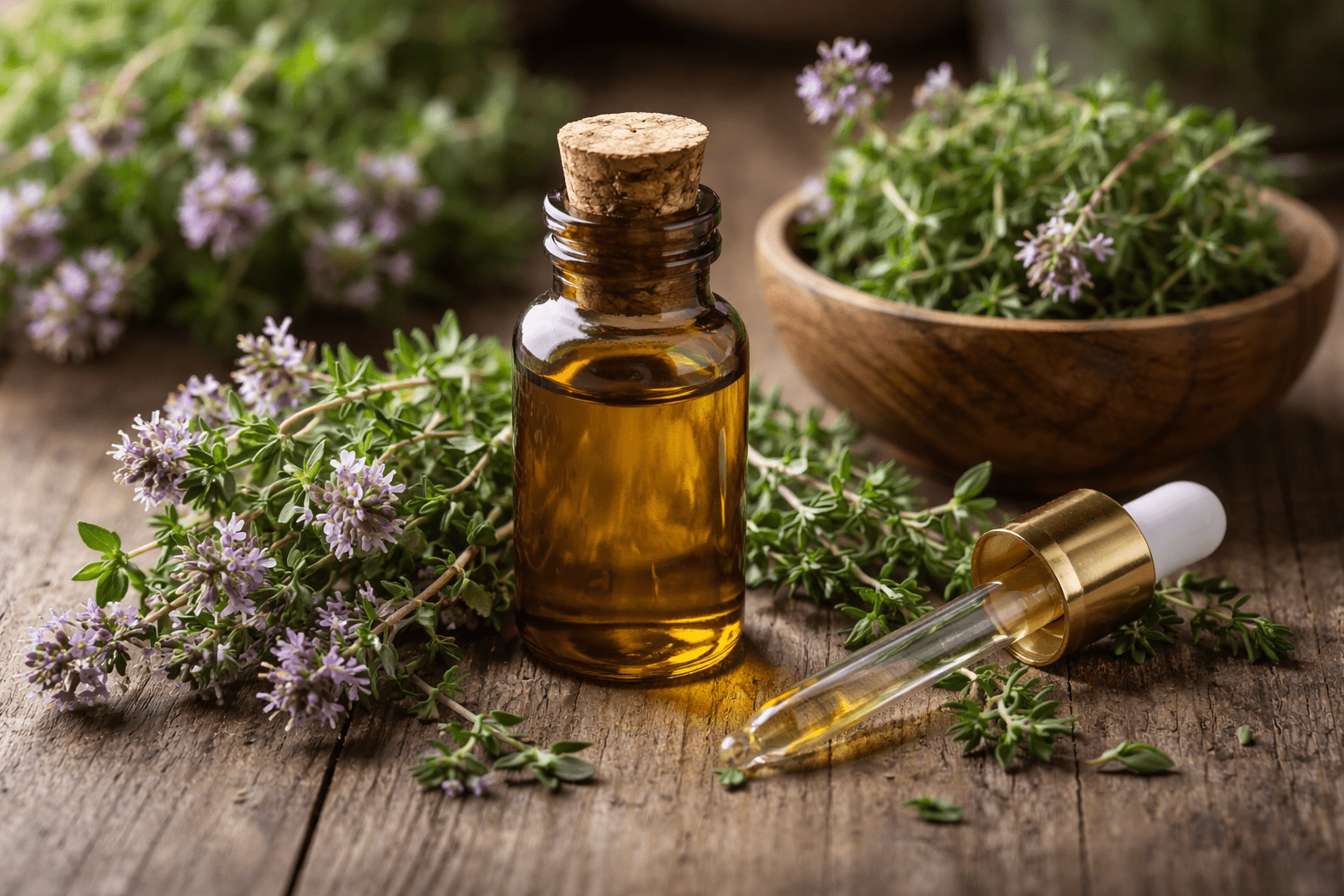
Thyme Essential Oil

Thymus vulgaris

Product History

Thyme essential oil is derived from the aromatic herb Thymus vulgaris, which has been valued for thousands of years for its medicinal and preservative properties. Its use dates back to ancient civilizations such as Ancient Egypt, where thyme was used in embalming practices, and Ancient Greece, where it was burned as incense in temples and believed to provide courage and strength. The Roman Empire later adopted thyme for purification, bathing, and flavoring food.

The process of extracting thyme essential oil through steam distillation became more refined during the medieval period, particularly in Europe, where thyme was widely used for its antiseptic qualities during times of disease. By the 19th century, scientists identified thymol as the primary active compound in thyme oil, leading to its inclusion in early antiseptic and disinfectant formulations.

In modern times, thyme essential oil is widely used in aromatherapy, natural medicine, and the cosmetic and pharmaceutical industries. It is known for its strong antibacterial, antifungal, and antioxidant properties, making it a popular ingredient in health products, skincare formulations, and natural cleaning solutions.

Distillation Process

  •  Harvesting and Chopping Preparation
    Fresh Thymus vulgaris is harvested, usually just before flowering when the oil content is highest. The plant material is then cleaned and roughly chopped to increase the surface area, which helps release more essential oil during distillation.
  • Steam Generation and Distillation
    The chopped thyme is placed in a distillation chamber where steam is passed through the plant material. The heat from the steam breaks down the oil glands, allowing the essential oil to evaporate along with the steam.
  • Condensation & Oil Separation
    The steam carrying the essential oil vapors moves into a condenser, where it cools and turns back into liquid. This liquid mixture of water and oil is collected in a separator, where the lighter essential oil naturally separates from the water.
  • Filtration & Storage
    The extracted thyme essential oil is filtered to remove any impurities. It is then stored in dark, airtight glass bottles to protect it from light and oxidation, ensuring long-term quality and potency.

Specifications

Parameter
Specification
Botanical Name
Thymus vulgaris
Origin / Source
INDIA
Extraction Method
Steam Distillation
Plant Part Used
Leaves, Flowering tops and Tender stems
Oil Colour
Pale Yellow to Light Amber
Aroma Profile
Sharp, fresh, slightly spicy
Consistency
thin to medium
Shelf Life
3 Years
Blends Well With
Herbal Oils, Citrus Oils , Floral Oils Woody Oils and Spicy Oils

Safety & Precautions: Dilute before topical use (1–2%). Avoid during pregnancy. Not for children under 2.

Available Pack Sizes: 1kg, 5kg,10kg,25kg Aluminium Bottle

Powerful Uses of Thyme Essential Oil

Powerful Antibacterial & Antifungal Support

Thyme oil is known for its strong antimicrobial properties. It helps protect against bacteria and fungi, making it useful for hygiene and natural cleaning.

Respiratory Health & Immunity Boost

Its soothing properties help ease cough, congestion, and respiratory discomfort. It supports overall immune system function.

Acne Control & Skin Purification

Thyme oil helps fight acne-causing bacteria and reduce breakouts. It promotes clearer, cleaner, and healthier-looking skin.

Hair & Scalp Health

It helps improve scalp condition by reducing dandruff and irritation. Supports stronger hair roots and healthier growth.

Energy Boost & Mental Clarity

The fresh, herbal aroma helps reduce fatigue and improve focus. It promotes alertness and mental clarity.

Natural Cleaning & Disinfection

With its strong antibacterial properties, thyme oil is effective in DIY cleaning solutions. It helps maintain a clean and germ-free environment.

© Moreways Co., Ltd. All Rights Reserved